
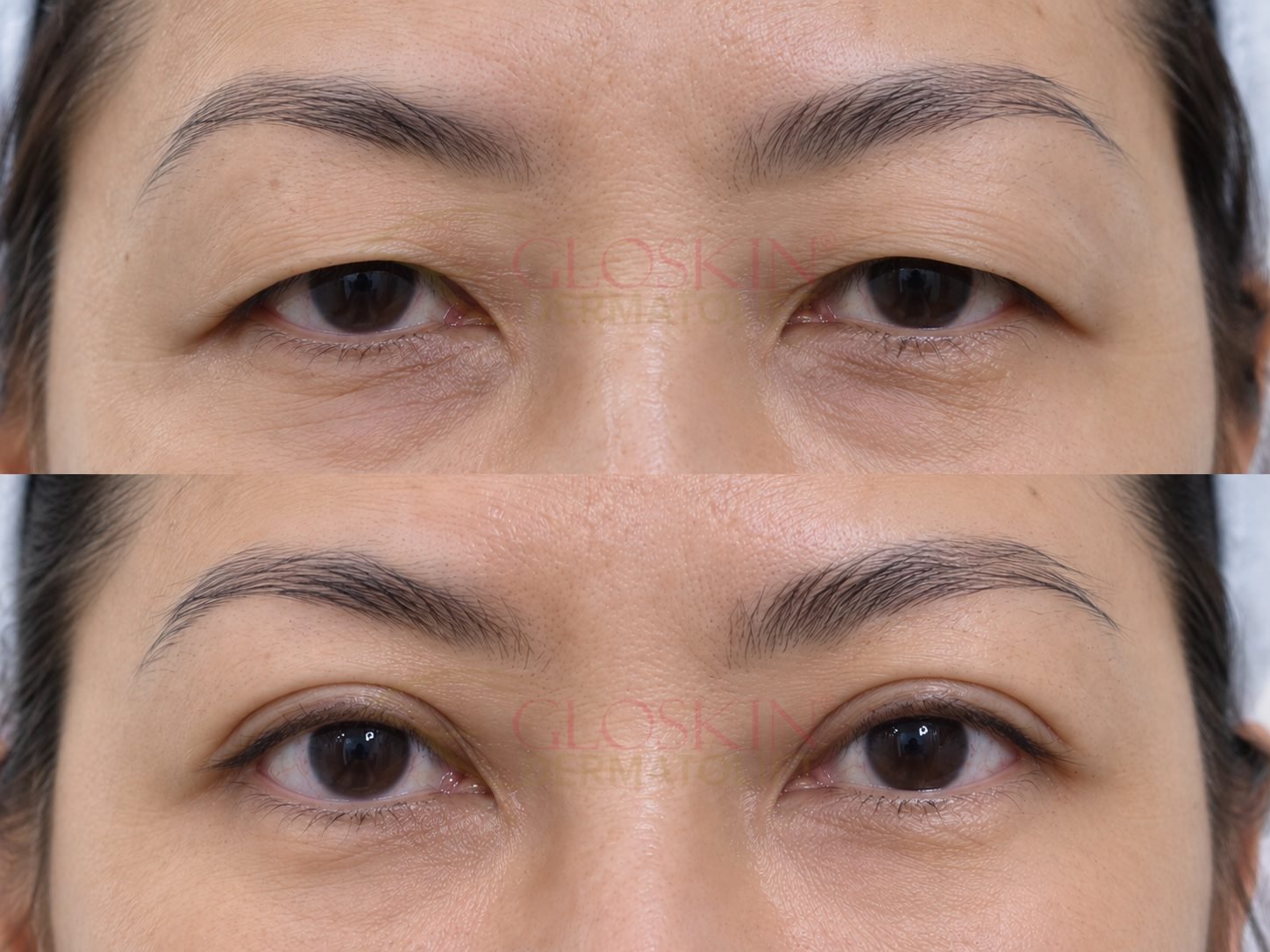
Upper Eyelid
Tidies the upper eyelid so the eye area looks more open, lighter, and fresher
What is Upper Eyelid Surgery
Upper Eyelid Surgery, or Upper Blepharoplasty, is a surgical procedure that tidies up excess skin, fat, and tissue on the upper eyelid. The goal is for the eye area to look more open, fresh, and still natural. In some people, excess eyelid skin can also block the upper field of vision, so this procedure can help with sight too.
What Concerns Can It Address?
Upper Eyelid Surgery can help with:
- Upper eyelid skin that is loose or excessive.
- Eyelid creases that are covered by skin.
- Eyelids that look heavy or droopy.
- Eyes that look smaller or tired.
- Right and left eyelid shapes that look unbalanced.
- Eyelid skin that is starting to block the upper field of vision.
Good to Know
Eyes that look heavy are not always caused by loose eyelid skin.
The doctor will also check whether there is:
- A drooping brow position.
- A drooping eyelid.
- Excess eyelid skin.
- Fat that bulges in the eyelid.
- A combination of these conditions.
Because the cause can differ, the treatment needed can differ too.
How Does It Work?
Before the procedure, the doctor examines the condition of the eyelids, the brow position, the amount of excess skin and fat, and the balance between the right and left eyes. The incision is usually made along the natural eyelid crease so the scar is less visible. The excess skin and tissue are then tidied up as needed so the eyelid looks lighter and natural.
The goal is not to remove as much skin or fat as possible, but to get a neat, safe result that suits the patient’s eye shape. The doctor keeps the tissue needed to protect eyelid function and give a natural result. Removing too much tissue can make the eyelid hard to close, make the eyes feel dry, or make the eyelid look too hollow. That is why the procedure is done conservatively and adjusted to each patient’s anatomy.
Who Is It For?
Upper Eyelid Surgery can be considered if:
- Your upper eyelid skin is starting to sag.
- The eyelid crease is covered by skin.
- Your eyelids look heavy.
- Your eyes look smaller or tired.
- Eyelid skin is starting to block your vision.
- Your health condition allows surgery.
How Long Does the Procedure Take?
Upper Eyelid Surgery usually takes about 45–90 minutes. The time can differ depending on the condition of the eyelids and whether it is done together with other procedures.
What Is the Recovery Like?
| Time | What Usually Happens |
|---|---|
| Days 1–3 | Swelling, bruising, or a slightly tight feeling. |
| Days 4–7 | Swelling and bruising start to go down. Stitches can be checked or removed depending on the condition. |
| Days 7–14 | Usually more comfortable returning to work and light activity. |
| Weeks 3–6 | The eyelid shape starts to look more natural. |
| Months 1–3 | The result becomes more stable and the incision scars start to fade. |
| Months 3 – 6 | The result looks more settled. |
Recovery can differ for each patient.
When Do Results Start to Show?
Changes start to show once the swelling goes down.
- 7–14 days : the eyelids look more open.
- 3–6 weeks : the eyelid shape becomes clearer.
- 1–3 months : most of the swelling has gone down.
- 3–6 months : the result looks more stable.
Results can last a long time, but the aging process continues.
How Many Times Is It Needed?
Upper Eyelid Surgery is usually done in one procedure. However, as you get older, eyelid skin can change again, so a re-evaluation may be needed later on.
Will the Incision Scar Be Visible?
The incision is usually made along the natural eyelid crease so the scar is less visible.
At first, the scar can still look red. As it heals, it usually becomes less visible.
What Treatments Can It Be Combined With?
| Treatment | Condition | Goal |
|---|---|---|
| Brow Lift | Brows starting to drop | Helps lift the brow position. |
| Eyebag | Eye bags or loose under-eye skin | Helps tidy up the under-eye area. |
| Botox Cosmetic | Wrinkles around the eyes | Helps reduce expression lines. |
| GLOSKIN Laser | Dark spots or uneven skin tone | Helps improve skin tone |
| Skin Quality Treatment | Dry or less healthy skin around the eyes | Helps maintain hydration and skin quality. |
Not every treatment needs to be combined. The doctor decides based on the patient’s condition and needs.
What to Know Before the Procedure?
- Tell the doctor about your medical history, allergies, medications, vitamins, and supplements you are using.
- Tell the doctor if you have dry eyes, vision problems, thyroid disease, or have had eye surgery.
- Do not stop blood thinners without the doctor’s approval.
- It is best to avoid smoking because it can interfere with healing.
- Plan about 7–14 days of recovery before an important event.
What to Know After the Procedure?
- Use medication and ointment as the doctor advises.
- Use cold compresses if recommended.
- Sleep with your head slightly elevated.
- Do not rub or press on the eye area.
- Avoid strenuous exercise and lifting heavy objects for a while.
- Avoid makeup on the treated area until the doctor says it is safe.
- Protect the eye area from the sun.
- Come to follow-up visits as scheduled.
Risks to Know About
Like other surgical procedures, Upper Eyelid Surgery has possible complications, including:
- Swelling and bruising.
- Dry or irritated eyes.
- Eye area that is temporarily more sensitive.
- The right and left sides not yet being fully identical.
- A more visible scar.
- Infection or bleeding.
- Temporary difficulty closing the eyelid completely.
- Under-correction or over-correction.
The doctor explains the risks and how to reduce them before the procedure.
When to Contact the Doctor Right Away?
Contact the doctor right away if after the procedure you have:
- Severe or sudden eye pain.
- Decreased or changed vision.
- Swelling that quickly gets worse.
- Bleeding that does not stop.
- A very red and painful eye.
- Fever or signs of infection.
- Difficulty closing the eye together with a very dry feeling or pain.
Vision problems after surgery need to be checked by a doctor right away.
Consult a GLOSKIN Doctor
Eyes that look heavy are not always caused by loose eyelid skin. The doctor examines the condition of the eyelids, the brow position, the skin, the fat, and eyelid function to find the cause. Based on the examination, the doctor decides whether Upper Eyelid Surgery, a Brow Lift, or another combination of treatments suits you better. Treatment is adjusted to each patient’s condition so the result is safe, proportionate, and still looks natural.