
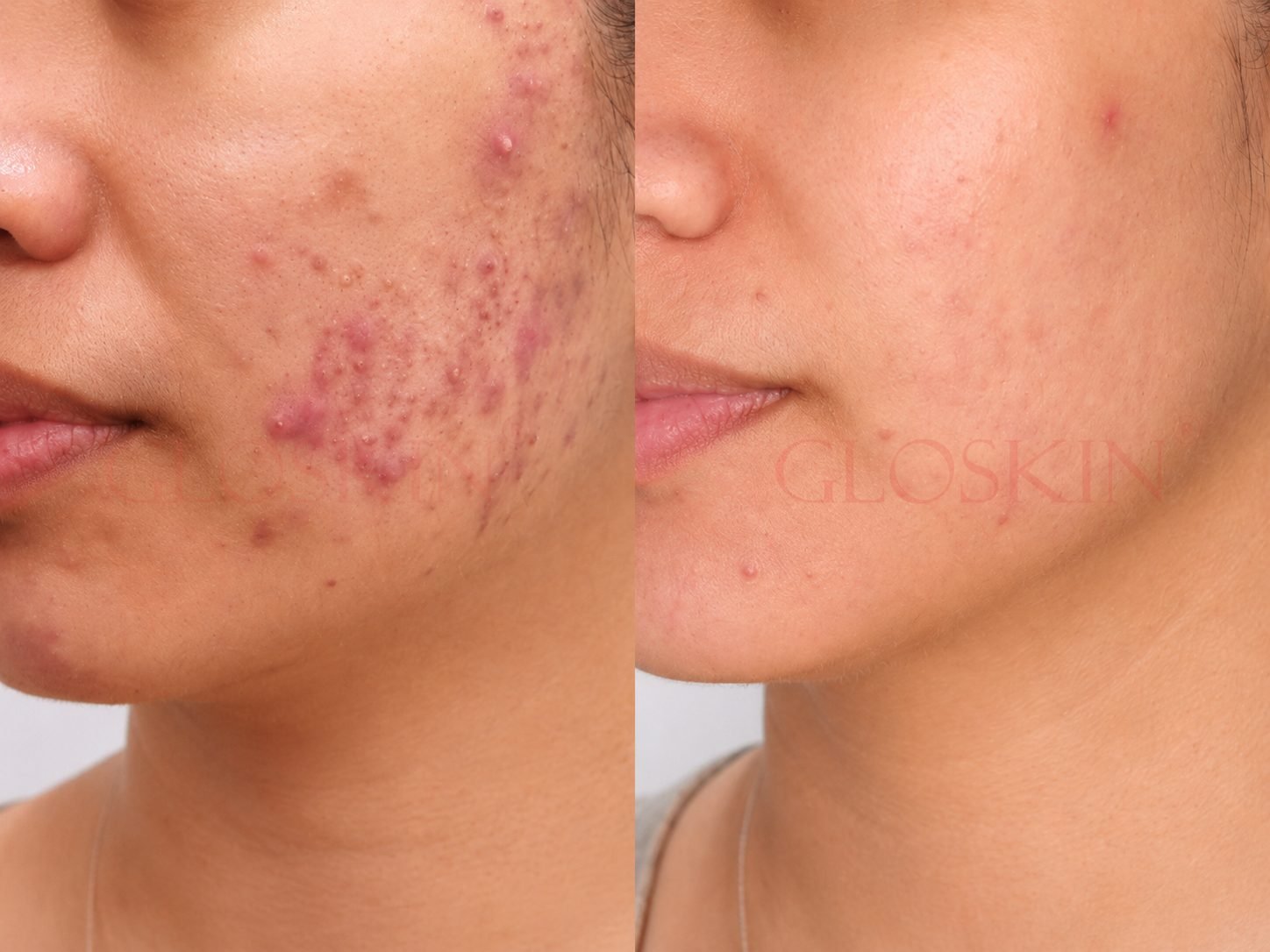
Acne Spot Injection
Helps Calm Large, Inflamed Pimples
What Is Acne Spot Injection?
Acne Spot Injection is a medical procedure that injects an anti-inflammatory medication directly into an inflamed pimple. Because it uses a strong medication injected straight into the skin, Acne Spot Injection should only be done after an examination by a doctor.
Important note: Acne Spot Injection is not a treatment that can be requested or done routinely without an indication. The decision to inject, the medication concentration, the amount of medication, the injection points, and when to repeat are entirely decided by the doctor.
What Kind of Acne Can It Treat?
Acne Spot Injection is for:
- Large, inflamed pimples.
- Nodular or cystic acne (like boils).
- Pimples that need help so the inflammation settles faster.
This procedure is generally not needed for:
- Blackheads or whiteheads.
- Small bumps (bruntusan).
- Small pimples that are not inflamed.
Acne spot injection is an additional therapy to help calm inflamed pimples, not the main therapy. The doctor will choose which pimples really need an injection.
How Does It Work?
Acne spot injection uses an anti-inflammatory medication injected in a small amount directly into the inflamed part of the pimple.
The medication works by helping to:
- Reduce inflammation.
- Ease redness and swelling.
- Reduce pain.
- Help large pimples shrink down.
- Reduce pressure from inflammation inside the pimple.
Acne Spot Injection does not remove every cause of acne. That is why patients still need skincare, topical medication, oral medication, or other treatments based on the doctor’s diagnosis.
Does the Procedure Hurt?
During the injection, patients may feel:
- A brief prick-like pain.
- Stinging or a slight pressure.
- An uncomfortable sensation for a few seconds.
Comfort can differ depending on the size, depth, and location of the pimple. The injection process is usually short.
When Do Results Start to Show?
The pimple can start to feel more comfortable and look flatter within a few days after the injection. In some patients, improvement can be seen sooner, but each person’s response differs.
Results are affected by:
- The size and depth of the pimple.
- How severe the inflammation is.
- How long the pimple has been there.
- Skin condition.
- How well aftercare is followed.
- The main cause of the acne.
Acne Spot Injection does not guarantee the pimple will disappear completely right away, and it does not prevent new pimples from forming in other areas.
Can the Injection Be Repeated?
Repeating can only be done after the doctor’s evaluation. A pimple that has not improved should not be injected again without an examination. Injecting too often at the same point, using too high a concentration, using too much medication, or placing the medication too shallowly can increase the risk of thinning of the skin and the fat tissue beneath it.
That is why:
- Patients cannot decide on their own when to repeat the injection.
- Not every pimple that appears needs to be injected.
- Repeating at the same point needs special consideration.
- The dose and spacing are set by the doctor.
- Acne Spot Injection is not routine maintenance care.
What Are the Risks and Side Effects?
Mild effects that can happen include:
- Pain or stinging at the injection point.
- Temporary redness.
- Mild swelling.
More important side effects to watch for include:
- Skin that becomes sunken or looks pitted.
- Skin thinning or skin atrophy.
- Loss of fat tissue under the skin.
- Skin that becomes lighter, or hypopigmentation.
- Infection at the injection point.
- Changes in skin color.
- Allergic reaction, although rare.
What to Know After the Procedure?
After Acne Spot Injection:
- Avoid touching or pressing the injection point.
- Do not squeeze the pimple.
- Avoid scrubs or irritating active ingredients on the area while your skin is still sensitive.
- Use skincare and acne medication as the doctor advises.
- Use sunscreen every morning.
- Keep the treated area clean.
- Do not ask for a repeat injection before the doctor evaluates you.
Contact the clinic right away if you have:
- Pain or swelling that keeps getting worse.
- Redness that spreads.
- Pus coming from the injection point.
- A wound or severe color change.
- Skin that starts to look sunken.
- Signs of an allergic reaction.
Consult a GLOSKIN Doctor
Large, painful pimples can be bothersome, but Acne Spot Injection is not always the right choice for every pimple.
A GLOSKIN doctor will examine your skin first to decide:
- Whether the pimple has an indication for an injection.
- Whether acne spot injection is safe to use in that condition.
- The suitable concentration and amount of medication.
- Whether you need additional medication or treatment.
- How to control the cause of acne so it does not keep coming back.