
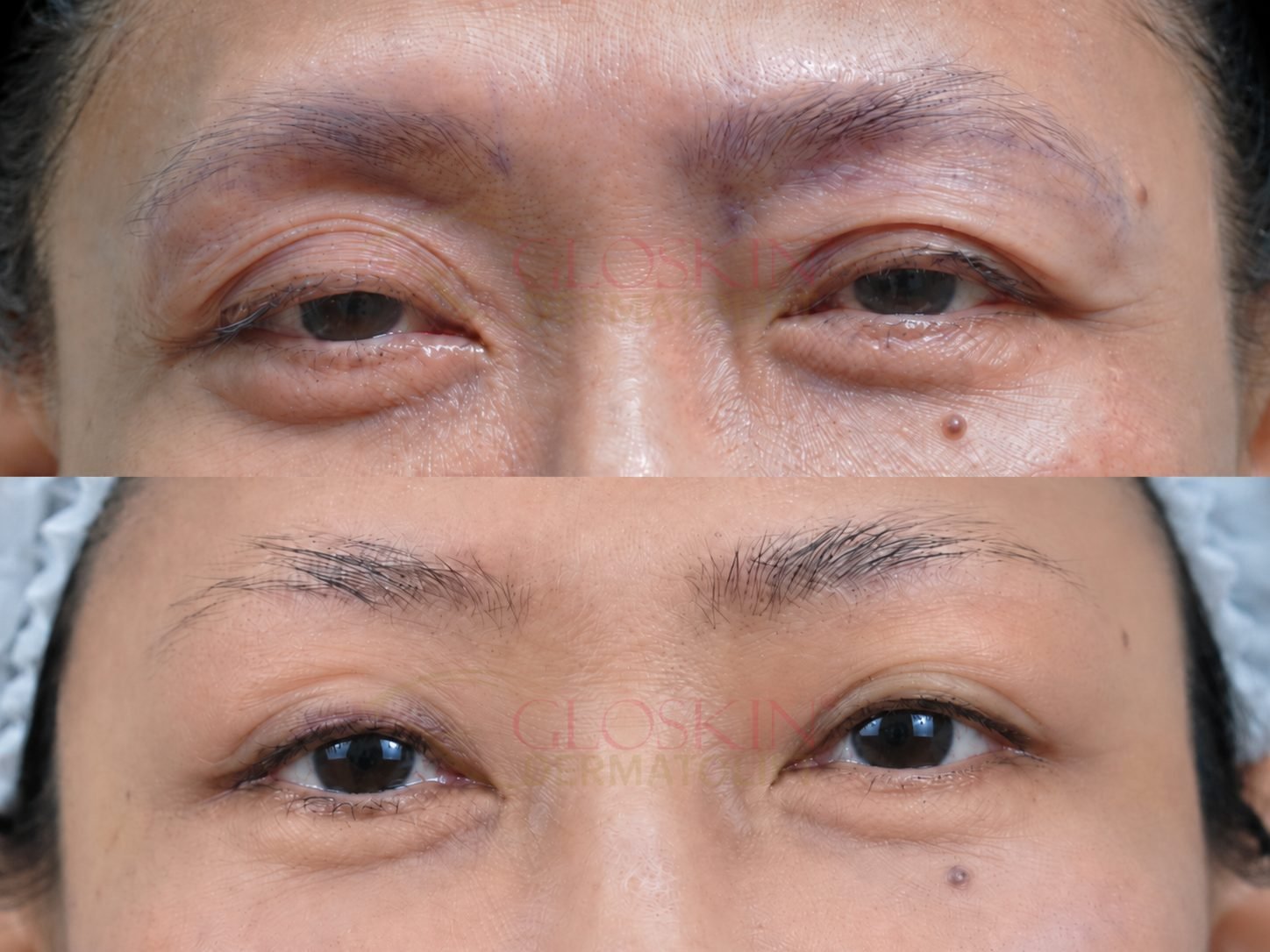
Brow Lift
Helps lift drooping brows so the eye area looks more open
What is a Brow Lift
Brow Lift is a surgery that raises the position of eyebrows that have started to droop. It helps make the eye area look more open, fresh, and less tired. The goal is not to lift the brows excessively, but to place them in a position that suits the patient’s face shape.
What Concerns Can It Address
- Eyebrows that are starting to look lower.
- Outer corners of the eyes that appear to slope down.
- An eye area that looks heavy, tired, or less fresh.
- Skin below the brow that has dropped and covers the upper eyelid.
- Right and left brows that look uneven.
A Brow Lift cannot always address all the excess skin on the eyelids. If the main problem is in the upper eyelid, the doctor may recommend Upper Eyelid Surgery instead, or combine both procedures.
How Does It Work
The doctor examines the brow position, forehead shape, hairline height, eyelid condition, and facial proportions. Through incisions adapted to the surgical technique, the tissue and skin above the brow are carefully released, then lifted and held in a better position. Incisions are usually placed in the hair, along the hairline, or at certain points around the brow so the scars are less visible. The techniques the doctor can choose from include:
- Temporal or Lateral Brow Lift: focuses on lifting the outer part of the brow that has started to droop.
- Hairline Brow Lift: uses an incision along the hairline and can be considered in certain conditions.
- Direct Brow Lift: the incision is made close to the brow and is usually chosen for specific needs.
How Long Is the Procedure and Recovery
A Brow Lift usually takes about 1–2 hours. It can take longer when combined with Upper Eyelid Surgery, SMASLift, or other procedures.
| Time | What May Happen |
|---|---|
| Days 1–3 | Swelling, bruising, a tight feeling, mild pain, or numbness on the forehead may occur. |
| Days 4–7 | Swelling starts to go down, but activity still needs to be limited. |
| Days 10–14 | Most patients start to feel comfortable returning to work or light activity. |
| Weeks 3–6 | The brow position starts to look more natural and mild swelling continues to fade. |
| Months 3–6 | Tissue continues to heal, scars fade, and results look more stable. |
Recovery can differ for each patient, depending on the surgical technique, the extent of the procedure, and how the body responds.
How Many Times Is It Needed
A Brow Lift is usually done in one procedure. The results can last a long time, but it does not stop the aging process. Over time, facial skin and tissue can still change.
When Do Results Start to Show
The change in brow position can be seen right after surgery, but the early result is still affected by swelling.
- 10–14 days: swelling and bruising are much reduced.
- 3–6 weeks: the brow position starts to look more natural.
- 1–3 months: the brow shape and forehead area look more stable.
- 3–6 months: the final result and the scars can be assessed better.
The brow position in the early period can look slightly higher because of swelling, and the tissue needs time to settle.
Does It Need to Be Combined with Other Treatments
Not always. A combination is chosen when there are other problems that a Brow Lift does not correct.
| Treatment | Additional Concern | Goal |
|---|---|---|
| Upper Eyelid Surgery | Excess skin on the upper eyelid | Tidy up loose or heavy-feeling eyelid skin. |
| Eyebag Removal | Under-eye bags | Helps reduce excess fat or skin under the eyes. |
| SMASLift | Sagging mid and lower face | Helps lift the cheek tissue, lower face, and jawline. |
| Botox Cosmetic | Expression lines on the forehead or between the brows | Helps reduce wrinkles caused by muscle movement. |
| GLOSKIN Laser | Dark spots and uneven skin texture | Helps improve skin tone. |
| Skin Quality Treatment | Dry skin or declining skin quality | Helps improve hydration and skin quality after recovery. |
Combinations are not always done on the same day. The doctor decides the order and timing that is safe for your condition.
What to Know Before and After the Procedure
Before the procedure:
- Tell the doctor about your medical history, allergies, previous surgeries, and all medications and supplements you use.
- Tell the doctor if you have dry eyes, vision problems, thyroid disorders, or clotting problems.
- Do not stop blood thinners without the approval of the doctor who treats you.
- Avoid smoking because it can slow healing.
- Plan about 10–14 days of recovery before returning to important social activities.
After the procedure:
- Take medication and care for the wound as instructed by the doctor.
- Sleep with your head slightly elevated to help reduce swelling.
- Avoid bending over for long periods, lifting heavy objects, and strenuous exercise for several weeks.
- Do not scratch or press on the forehead and the incision areas.
- Protect the scars from sun exposure.
- Contact the clinic right away if you have severe pain, bleeding, fever, vision problems, facial muscle weakness, or swelling that gets worse.
Risks of a Brow Lift can include bleeding, infection, temporary numbness, changes in skin sensation, brows that are not perfectly symmetrical, scarring, hairline changes, or hair loss around the incisions. The doctor will explain the risks during the consultation.
Consult a GLOSKIN Doctor
The doctor will assess whether a heavy-looking eye area is caused by drooping brows, excess eyelid skin, or both. This examination matters so the procedure chosen truly fits the source of the problem. The doctor will also decide the Brow Lift technique, the brow position that suits your face shape, the incision location, any combination treatments needed, the recovery period, and realistic results for you.