
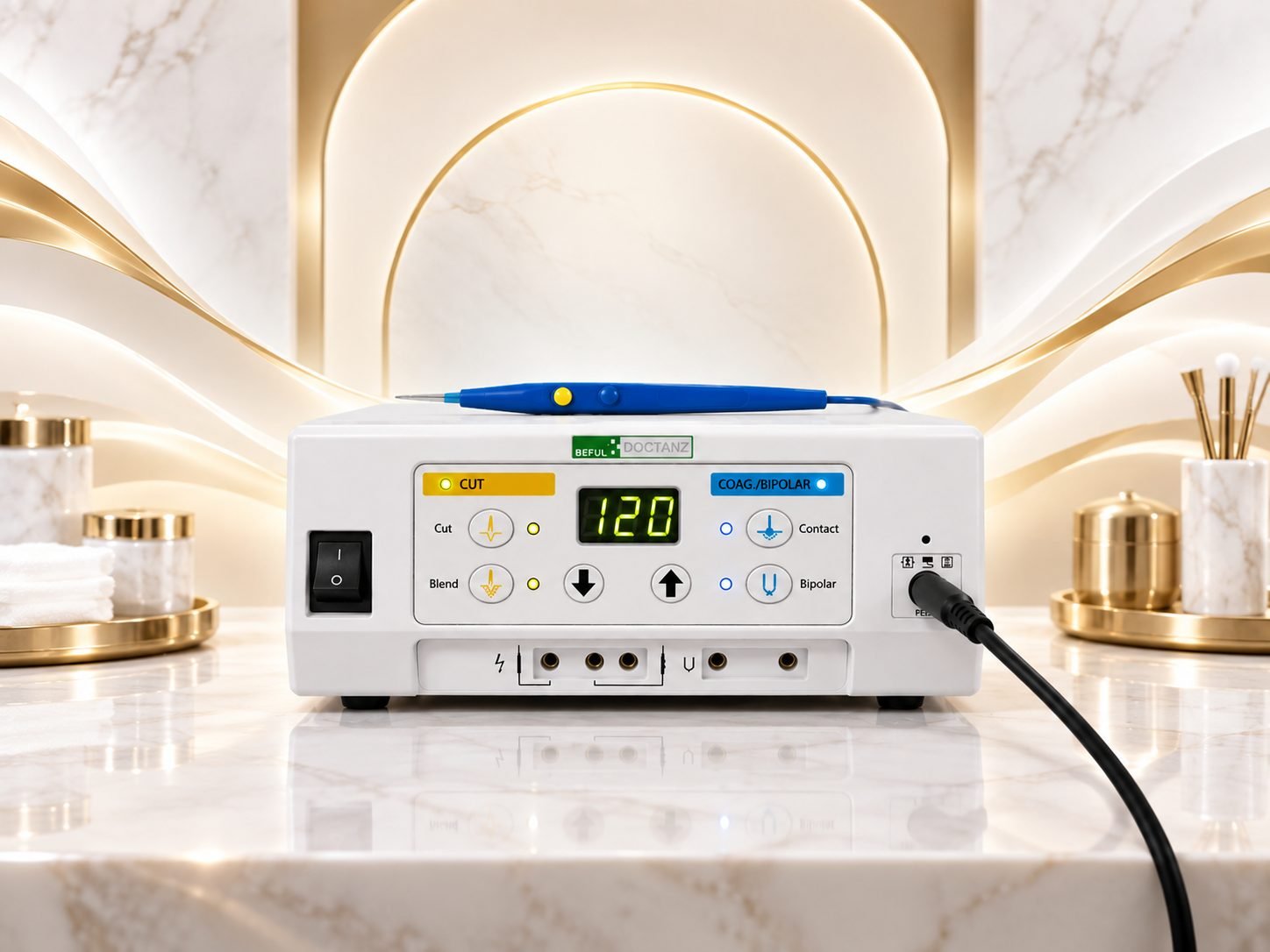
Electrocautery
Helps Remove Small Bumps on the Skin.
What Is the Electrocautery Treatment
Electrocautery is a procedure to remove small bumps on the skin using a special device that produces heat. The heat helps dry out and lift the bump, while also reducing bleeding.
Before the procedure, the doctor gives anesthesia so you feel more comfortable during the process.
What Concerns Can It Address
After being examined and judged suitable by the doctor, electrocautery can be used to help treat:
- Skin tags or small extra growths of skin
- Warts
- Seborrheic keratosis or brownish, rough-feeling texture
- Milia
- Syringoma or small bumps that usually appear around the eyes
- Sebaceous hyperplasia or small bumps from enlarged oil glands
- Cherry angioma or small red spots
- Other benign skin bumps according to the doctor’s diagnosis
Not every mole, bump, or skin tumor can be removed straight away with electrocautery. A bump that changes shape or color, grows quickly, bleeds easily, or looks suspicious needs further examination. The doctor may recommend a biopsy or removal through minor surgery so the tissue can be examined in a laboratory.
How Does It Work
The steps of the procedure generally include:
Skin examination
The doctor examines the type, size, depth, and location of the bump to make sure electrocautery is the right choice.
Cleaning the treatment area
The skin is cleaned to reduce the risk of infection.
Anesthesia
Anesthesia can be a cream or a local injection, depending on the location and size of the bump.
Removing the bump
The tip of the device produces heat to burn, dry out, or flatten the tissue to be removed. In some conditions, the doctor can remove the tissue first, then stop the bleeding with cautery.
Wound care
The treated area is cleaned and given a topical medication or wound dressing when needed. After the procedure, the skin surface usually forms a thin scab. This scab works as a natural protector while new skin forms underneath.
Who Is Electrocautery For
- Have a small bump that bothers your appearance
- Feel bothered by the bump
- Have irritation from repeated friction
- Have warts or benign skin growths
- Have been examined and approved by a doctor
Contraindications:
- History of keloids or raised scars
- Diabetes that is not yet under control
- Clotting disorders
- Conditions that make wounds hard to heal
- Active infection in the treatment area
- Electronic devices inside the body, such as a pacemaker
- Use of blood thinners
Tell the doctor about all your health conditions and the medications you are using. Do not stop medication without instructions from the doctor who prescribed it.
How Long Is the Procedure and Recovery
An electrocautery procedure generally takes about 20 – 60 minutes, including preparation and anesthesia. It can take longer if the bump is large or there are many of them.
A picture of recovery:
- Days 1 to 3: the treated area can look red, slightly swollen, feel stinging, and start to form a scab.
- Days 4 to 7: the scab starts to dry. Do not scratch or peel it.
- Days 7 to 14: the scab usually comes off on its own and new skin starts to show.
- Weeks 2 to 8: the reddish or darkish color left by the procedure slowly fades.
In some people, especially those with medium to dark skin tones, color changes can take a few weeks to a few months to fully even out. Recovery time is also affected by the size, depth, number, and location of the bumps.
How Many Treatments Are Needed
Most small bumps can be treated in 1 procedure. However, 2 sessions or more may be needed if:
- There are quite a lot of bumps
- The bumps are large or quite deep
- The treated area is wide
- The doctor chooses a staged procedure so recovery is more comfortable
- The bump grows back, as with some types of warts
If a follow-up procedure is needed, the doctor usually waits for the skin to recover before setting the next schedule.
When Do Results Start to Show
The bump is usually reduced or lifted right after the procedure. However, the area is still covered by a scab, so the final result cannot be judged right away.
In general:
- Early result: seen after the scab comes off, about 7–14 days
- Skin surface starts to look smoother: about 2–4 weeks
- Skin tone starts to even out: about 4–8 weeks
- Certain reddish or darkish marks: can take up to a few months
Results differ for each person. Some types of bumps, especially warts, can still grow back.
Does It Need to Be Combined with Other Treatments
Electrocautery can be done as a single procedure. However, in some conditions further care is needed, such as:
- Minor skin surgery or biopsy, if the bump needs to be removed whole and examined in a laboratory.
- Laser for pigmentation, if dark marks remain after the wound has fully healed.
- Scar care, if there is a risk or complaint of scarring and keloids.
- Treatment for acne and blackheads, if the bumps are related to oily skin, blackheads, or enlarged oil glands.
- Skincare from the doctor, to help maintain the skin barrier and reduce the risk of color changes after the procedure.
Additional treatments are not done while the skin is still open, scabbed, or irritated. The doctor will decide a safe time based on how your skin recovers.
What to Know Before and After the Treatment
Before the Treatment
- Tell us about any history of allergies, diabetes, clotting disorders, keloids, or wounds that are hard to heal.
- Tell us if you have a pacemaker or another electronic device inside your body.
- Tell the doctor about the medications, vitamins, supplements, and blood thinners you are using.
- Do not stop medication without the doctor’s approval.
- Avoid scratching, squeezing, or trying to remove the bump yourself.
- Do not have the procedure when your skin is infected, severely inflamed, or sunburned.
- Avoid scrubs, peels, retinoids, AHA, or BHA on the treatment area for 3–5 days before, if the doctor advises.
After the Treatment
- Keep the treated area clean and follow the doctor’s wound care instructions.
- Use topical medication or wound dressing as advised.
- Do not scratch or peel the scab because it can raise the risk of infection, color changes, and scarring.
- Avoid retinoids, AHA, BHA, scrubs, and products that sting for about 5–7 days or until the wound heals.
- Avoid makeup on areas that are still open. Makeup can usually be used again once the wound closes, as the doctor advises.
- Avoid strenuous exercise, swimming, saunas, and activities that make the treated area sweat a lot for 24–48 hours.
- Once the skin surface has closed, use sunscreen of at least SPF 30 and avoid direct sun exposure.
- Contact the clinic right away if you have pain that keeps getting worse, bleeding that is hard to stop, pus, fever, or redness and swelling that spreads.
Consult a GLOSKIN Doctor
Every bump on the skin can have a different cause. That is why the doctor needs to confirm first whether the bump is safe to treat with electrocautery or needs another examination.
A GLOSKIN doctor will examine your skin, explain the benefits and risks, decide the suitable technique, and give wound care guidance so recovery goes more safely.