
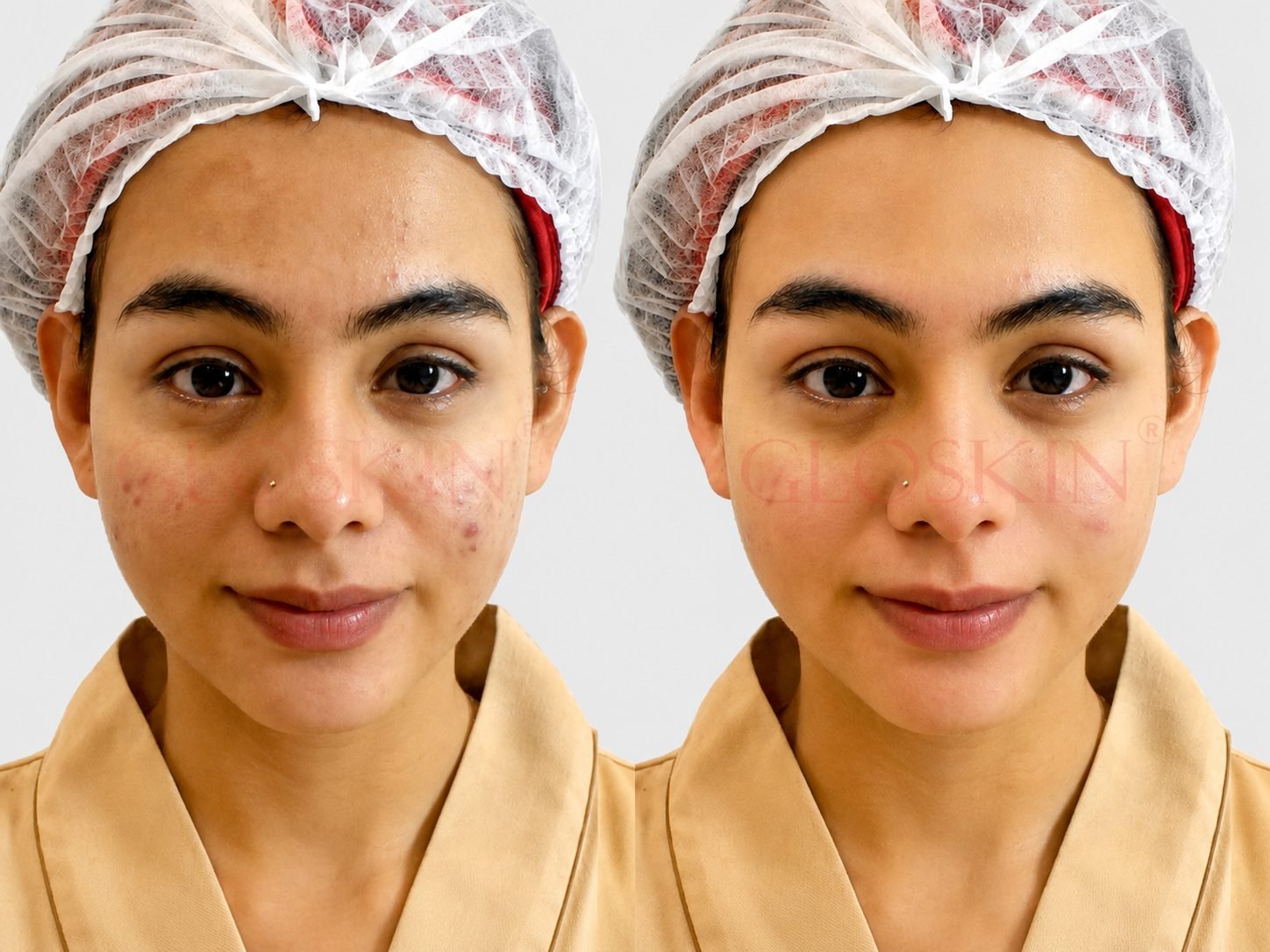
G-Bright Laser
G-Bright helps fade dark spots and even out skin tone.
What is G-Bright Laser treatment?
G-Bright Laser is a treatment that helps fade dark spots and even out skin tone using laser energy. It can be considered when spots remain bothersome despite using skincare. The goal is to help skin tone look more even, with results that appear gradually.
What concerns can it address?
- Brownish spots from sun exposure.
- Freckles or brown spots on the skin.
- Certain dark post-acne marks.
- Uneven skin tone caused by pigment buildup.
For melasma or spreading patches, the doctor needs to assess suitability first, because not every patch can be treated with a laser.
How does it work?
The laser delivers energy in a very short time to break up the pigment causing the spots. The body then clears the pigment fragments gradually so the spots can fade. During the procedure, the skin may feel warm or like a light snap.
Who is it suitable for?
Men and women with dark spots that are assessed as suitable for laser. The doctor will examine the type of spot, skin tone, and treatment history. If the skin is irritated, wounded, or infected, the procedure needs to be postponed.
How long does the procedure take, and what is recovery like?
As a guide, a facial procedure can take about 15-30 minutes, not including preparation. The exact time depends on the size of the area and clinic protocol. Mild redness may appear for a few hours up to 1-3 days. Darkening or thin crusts on the targeted spots usually appear with tattoo removal work and typically settle within 7-14 days.
How many sessions are needed?
Laser sessions can be scheduled as 3 visits about 4 weeks apart for mild pigmentation. Later visits begin with an evaluation, and the laser is repeated only if still needed and the skin has recovered.
When will results start to show?
| 1 | 7-14 days | : | if crusting or temporary darkening appears, wait until the skin recovers before judging the color of the spots. |
|---|---|---|---|
| 2 | 2-4 weeks | : | the initial time to evaluate whether spots are starting to fade. |
| 3 | 8-12 weeks | : | the overall evaluation time if following the example three-visit series above. |
These figures are estimated evaluation times, not exact limits for when results appear. Spots may not disappear completely and can come back, especially if triggers such as sun exposure are not controlled.
Does it need to be combined with other treatments?
| 1 | LHA Peel | : | Helps care for the skin surface; scheduled separately if needed. |
|---|---|---|---|
| 2 | XelaRederm / SKINVIVE | : | Helps with hydration and skin quality; choose one according to your needs. |
| 3 | Botox | : | Addresses wrinkles caused by muscle movement. |
| 4 | UltraLift | : | Addresses mild laxity in suitable patients. |
| 5 | Face Therapy | : | Helps clear leftover dirt and dead skin cells and nourish the skin. |
What should I note before and after treatment?
Before the procedure:
- Avoid sun tanning or excessive sun exposure.
- Tell your doctor about the medications, skincare, and treatments you are currently using.
- Mention if your skin is stinging, peeling, or darkens easily after irritation.
After the procedure:
- Use sunscreen of at least SPF 30 and a moisturizer.
- Do not rub the skin or pick at crusts.
- Postpone scrubs, retinol, and exfoliating products until your doctor allows them.
- Contact the clinic if blisters or increasing pain appear.
Lasers can cause skin to become darker or lighter, so adjustment and monitoring by your doctor are important.