
Acne: Causes, Severity, Treatment, and Evaluating Therapy
Acne vulgaris, or acne, is a chronic inflammatory disease of the pilosebaceous unit that mainly affects the face, chest and back. Acne most often appears in teenagers, but it can persist or first appear in adulthood. It shows up as comedones, papules, pustules, nodules and cysts. Acne that is not treated properly can lead to post-inflammatory hyperpigmentation (PIH), post-inflammatory erythema (PIE), acne scars, and psychological effects.
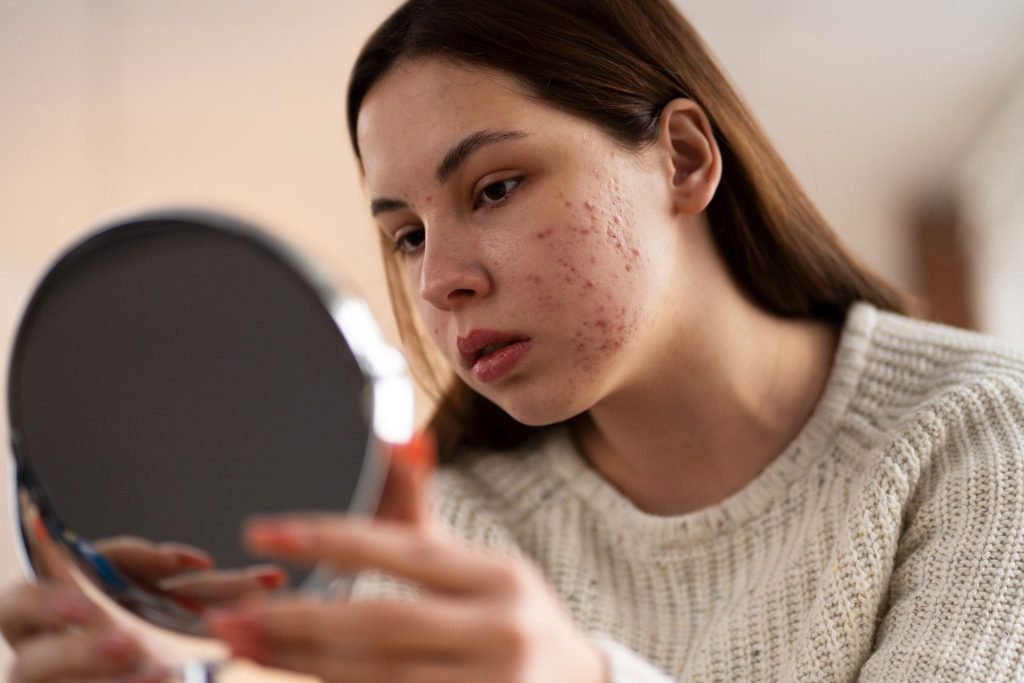
Acne vulgaris, or acne, is a chronic inflammatory disease of the pilosebaceous unit that mainly affects the face, chest and back. Acne most often appears in teenagers, but it can persist or first appear in adulthood. It shows up as comedones, papules, pustules, nodules and cysts. Acne that is not treated properly can lead to post-inflammatory hyperpigmentation (PIH), post-inflammatory erythema (PIE), acne scars, and psychological effects.
Acne Severity
Clinically, acne can be categorized as:
- Mild: mostly comedones with a few papules or pustules.
- Moderate: more papules and pustules, with widespread comedones and sometimes a few nodules.
- Severe: deep inflammatory lesions such as many nodules/cysts, acne conglobata, widespread acne, or acne with a high risk of scarring.
The assessment also needs to consider location, scarring risk, response to earlier treatment, and the effect on quality of life.
Causes and Triggers
Acne is multifactorial, with four main mechanisms: increased sebum production, follicular hyperkeratinization that causes blockage, changes in the microbiome, mainly Cutibacterium acnes, and inflammation.
Factors that can make acne worse include hormonal changes, stress, lack of sleep, occlusion or friction, unsuitable cosmetics/skincare, and certain medications. In adult women, acne that gets worse before menstruation or mostly appears around the jaw/chin can point to a hormonal component. Certain medical conditions and the use of certain medications can also trigger acne.
Acne Treatment
The goals of therapy are to control active lesions, prevent new lesions, PIH and scars, and maintain remission.
- Topical Therapy
For mild acne and some moderate acne, topical therapy is the basis of treatment. Options include topical retinoids such as adapalene or tretinoin, benzoyl peroxide (BPO), and azelaic acid. Topical antibiotics such as clindamycin can be used in certain conditions, but are not recommended as monotherapy because of the risk of resistance.
Combinations with different mechanisms, such as adapalene-BPO, can improve the effectiveness of treatment and are one of the first-line options.
- Oral Antibiotics
For moderate to severe inflammatory acne, oral antibiotics such as doxycycline can be considered. They should be combined with topical therapy and limited in duration to reduce the risk of resistance. Evaluation is usually done after about 12 weeks.
- Hormonal Therapy and Isotretinoin
In women with a hormonal component, a combined oral contraceptive or spironolactone can be considered after clinical evaluation and a check for contraindications.
Oral isotretinoin can be considered for severe acne, acne with a risk of scarring, significant psychosocial impact, or acne that does not respond to standard therapy. Because of the risk of side effects, especially teratogenicity, the therapy must be done under a doctor’s supervision with appropriate monitoring.
Additional Treatments and Skin Care
Intralesional corticosteroids can be considered for large, painful nodules. Comedone extraction or device-based procedures can be an add-on therapy in certain cases, but they do not replace the main pharmacological therapy. The main focus of acne treatment depends on each person’s condition. For inflamed acne, an acne injection is one option. In some conditions acne peels, VIP light and laser can also be done, and for certain acne scars, treatment can be combined with Salmon DNA and Exosome treatments.
Patients should avoid squeezing pimples, harsh scrubs, over-exfoliation, using too many active ingredients, and products that are too occlusive or comedogenic. Basic care includes a gentle cleanser, a non-comedogenic moisturizer, and a broad-spectrum sunscreen to protect the skin barrier.
Evaluation After Treatment
Response to treatment should ideally be evaluated within 8-12 weeks, with a review at 12 weeks as one of the NICE recommendations. The evaluation covers the number of new lesions, inflammation, comedones, side effects, adherence, PIH, and scar development.
If the response is good, treatment can continue and maintenance therapy can be considered to prevent relapse. If the response is not adequate, the diagnosis, adherence, how the medication is used, triggers, and the possibility of escalating treatment or referral need to be reviewed.
Acne is a multifactorial inflammatory disease that needs individual treatment based on its severity, the patient’s characteristics, scarring risk, and response to therapy. Optimal management includes control of active acne, prevention of scars and pigmentation, care of the skin barrier, and long-term maintenance therapy.
References
- American Academy of Dermatology Association. Guidelines of care for the management of acne vulgaris. J Am Acad Dermatol. 2024.
- National Institute for Health and Care Excellence (NICE). Acne vulgaris: management (NG198). Published 2021; updated 2026.
- Dréno B, et al. From pathogenesis of acne vulgaris to anti-acne agents. Arch Dermatol Res. 2019;311:337-349.
- Del Rosso JQ, et al. The primary role of sebum in the pathophysiology of acne vulgaris and its therapeutic relevance in acne management. J Dermatolog Treat. 2024;35(1):2296855.
- Dréno B, et al. Recent advances in understanding Cutibacterium acnes in acne. J Eur Acad Dermatol Venereol. 2019.
Discussion
Comments & Questions
Share your comments or questions about this article.