
The Advantages of SMAS Lift Treatment for a Sagging Face
Ever looked in the mirror and felt your face looks different from a few years ago? Your cheeks start to drop, your jawline is not as sharp as it used to be, or small sags begin to appear on both sides of the jaw, often called jowls.
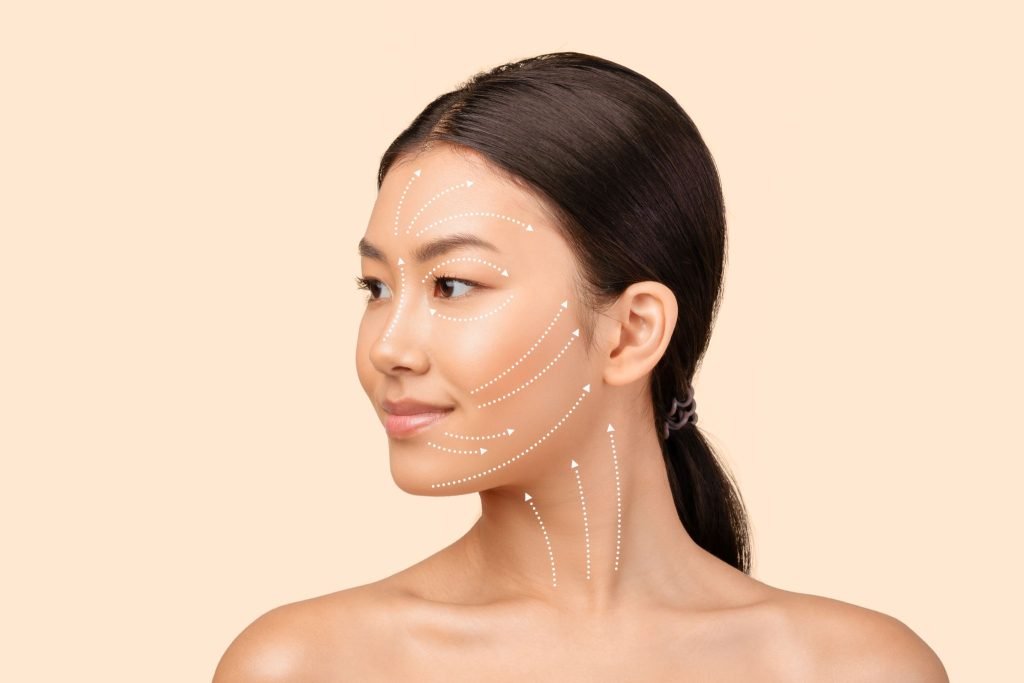
Ever looked in the mirror and felt your face looks different from a few years ago? The cheeks start to drop, the jawline is not as defined as it used to be, or small sagging pockets appear on both sides of the jaw, often called jowls.
As we age, the changes happen not only in the skin but also in the muscles, the supporting tissue of the skin, and the structures beneath the skin. It turns out the cause is not only skin that is starting to loosen. The tissues that support the face from within also change and slowly sink.
When the changes are still mild, various non-surgical treatments can be an option. However, once the facial tissue has dropped quite a lot, treatments that work without surgery may not give the lifting result you hope for.
One procedure that can be considered is SMAS Lift. So what exactly is a SMAS Lift, and who is it suitable for?
What Is a SMAS Lift?
Simply put, a SMAS Lift is a face lift procedure that lifts and tightens facial tissue that has started to drop.
SMAS stands for Superficial Musculoaponeurotic System. SMAS is one of the layers of tissue under the skin that helps support the shape of the face.
That is why an aging face is not always enough to treat by only “tightening the skin”.
In a SMAS Lift, the treatment is done on the skin, muscle, and tissue beneath the skin that has dropped, which are then lifted and repositioned to a better place according to the patient’s facial condition.
The aim is for the face to look firmer and the facial contour to become clearer again, while keeping the natural character of the face.
Signs the Face Is Starting to Sag
Some changes that often start to appear are:
• Cheeks look like they are dropping more;
• Jowls or sagging pockets appear at the sides of the jaw;
• The jawline starts to lose definition;
• The lower face looks heavier;
• The skin of the face and neck becomes looser; and
• Folds on the face look deeper.
Interestingly, these changes are not always related to age.
Some people are relatively young but already have fairly clear jowls. On the other hand, some people who are older still have a good jawline.
For this reason, the decision to have a SMAS Lift is not determined by age alone.
What Are the Benefits of a SMAS Lift?
A SMAS Lift can help improve several signs of facial aging, especially dropping cheeks, jowls, a jawline that is starting to disappear, and loose skin and tissue in the lower face.
Most importantly, the goal of a SMAS Lift is not to make the face look as tight as possible. A good result is one where the face looks fresher, more lifted, and proportional without drastically changing the expression or character of the face.
In other words, people still recognize you as yourself.
What Is the Difference Between a SMAS Lift and HIFU?
HIFU and SMAS Lift are both often discussed as treatments for a sagging face. However, the two are actually very different.
HIFU is a non-surgical treatment. The device delivers ultrasound energy to a certain layer under the skin to help stimulate tissue tightening.
Meanwhile, a SMAS Lift is a surgical procedure.
In a SMAS Lift, the doctor can directly lift and rearrange facial tissue that has dropped. Because the method is different, the level of change it can give is also different. If the sagging is still mild, a non-surgical treatment may still be an option.
However, when the cheeks, jowls, and facial tissue have dropped quite noticeably, the doctor needs to see whether a non-surgical treatment is still enough or whether a lifting procedure should be considered.
So, a SMAS Lift is not a stronger version of HIFU.
The two are different procedures and each has its own uses.
SMAS Lift or Thread Lift?
A thread lift, or thread implant, uses special threads placed under the skin to give a lifting effect in certain conditions. A SMAS Lift is different because it is a surgical procedure that allows the doctor to work directly on the tissue that supports the face.
A thread lift can be an option for certain people, but its result cannot be equated with a facelift on a face that already has quite severe sagging.
Is a SMAS Lift the Same as a Deep Plane Facelift?
Lately, the term Deep Plane Facelift has come up quite often on social media.
Deep Plane Facelift and SMAS Lift are both facelift techniques, but the way the doctor lifts the facial tissue is different. In the medical world there are actually many facelift techniques. The doctor will choose a technique based on each patient’s facial condition and needs.
What you need to know is that there is no single facelift technique that is automatically the best for everyone.
Research comparing various facelift techniques shows that both the SMAS and Deep Plane techniques can give good results.
So, instead of choosing a procedure just because it is popular, it is far more important to know which technique suits your facial condition.
Can a SMAS Lift Look Natural?
One of the biggest worries before having a facelift is:
“Will my face look pulled?”
A modern facelift does not aim to pull the skin as tight as possible. The doctor also pays attention to the tissue beneath the skin, the shape of the cheeks, the jawline, the neck, and the overall balance of the face.
The expected result is a face that looks fresher and more lifted, but still looks like yourself. Of course, results can differ from person to person because each patient’s face shape and starting condition are different.
How Long Do SMAS Lift Results Last?
Facelift results can last for years. However, a facelift does not stop the aging process.
After the procedure, the face will still change as you get older.
How long the results last can also differ for each person. Skin condition, age, face shape, weight changes, smoking habits, sun exposure, lifestyle, and the technique used can all affect the result.
For this reason, be careful with claims that one type of facelift “will surely last 10 or 15 years” for everyone.
Is a SMAS Lift Safe?
Because it is a surgical procedure, a SMAS Lift still carries risks.
After the procedure, patients may experience swelling and bruising during recovery.
As with other surgeries, there is also a possibility of bleeding, infection, wound healing problems, scarring, changes in skin sensation, an asymmetrical face, and even problems with the facial nerves. Nerve problems can be temporary and, in rarer cases, can be permanent.
Each person’s risks are different. For this reason, the patient’s health condition needs to be examined first before the procedure is done.
If you feel your cheeks are starting to drop, jowls are becoming more visible, or your jawline is starting to disappear, SMAS Lift is now available at GLOSKIN Dermatolift.
The procedure is performed by dr. Prissilma Tania Jonardi, Sp.DVE, a Specialist Doctor in Dermatology, Venereology and Aesthetics.
At GLOSKIN Dermatolift, dr. Prissilma Tania Jonardi, Sp.DVE will first examine the condition of your face to determine whether a non-surgical treatment is still an option or whether it is time to consider a lifting procedure.
References
Mitz V, Peyronie M. The Superficial Musculo-Aponeurotic System (SMAS) in the Parotid and Cheek Area. Plastic and Reconstructive Surgery. 1976.
Hamra ST. The Deep-Plane Rhytidectomy. Plastic and Reconstructive Surgery. 1990.
Stuzin JM, et al. Extended SMAS Dissection as an Approach to Midface Rejuvenation. Clinics in Plastic Surgery. 1995.
Baker DC. Lateral SMASectomy. Plastic and Reconstructive Surgery. 1997.
Evolution of SMAS Facelift Techniques: A Comprehensive Systematic Review of Complications and Outcomes.
Comparing the Safety and Efficacy of SMAS and Deep Plane Facelift Techniques: A Systematic Review and Meta-analysis.
Demystifying Deep Layer Face-Lift Techniques: A Systematic Review of SMAS Techniques.
Discussion
Comments & Questions
Share your comments or questions about this article.