
5 Signs of Thinning Hair That Are Often Seen as Normal
Thinning hair can happen so gradually that the first changes go unnoticed. Learn to recognize the signs.
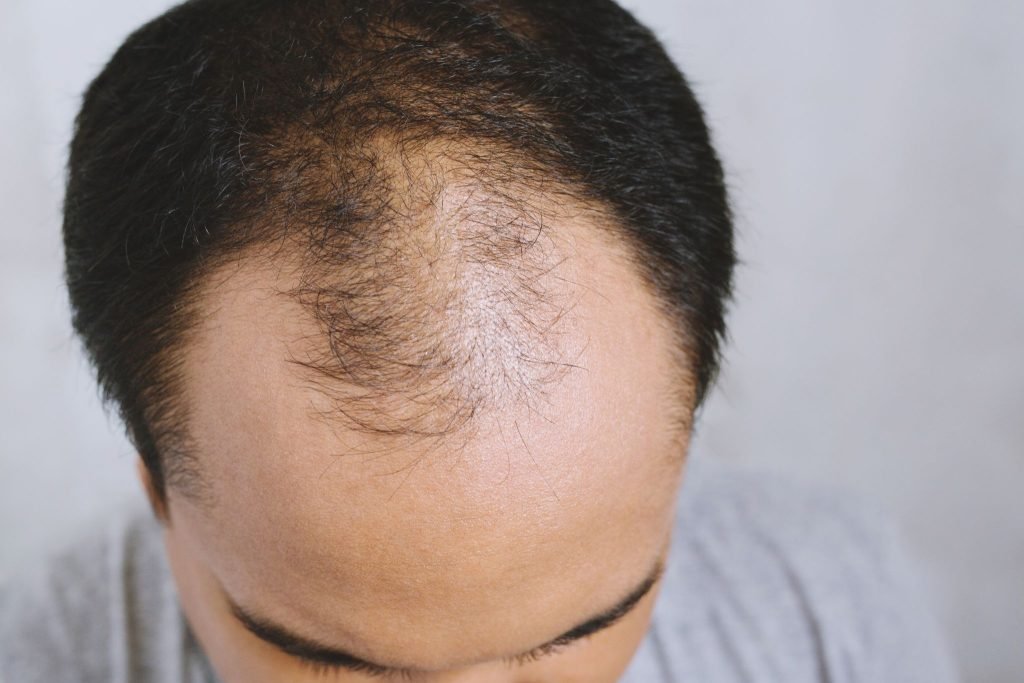
Think Your Hair Is Fine? Take Another Look
Thinning hair can happen so gradually that the first changes go unnoticed. Learn to recognize the signs.
Hair problems often only feel important once the changes become visible. But thinning hair does not always happen suddenly. Hair loss and thinning can have many causes. One of the most common is androgenetic alopecia (AGA), a patterned hair loss that can occur in both men and women.
AGA is found more often in men than in women, and it tends to become more common with age. In men, the condition is known as male androgenetic alopecia or male pattern hair loss. Unfortunately, the change is often only noticed when the hair already looks much thinner.
Check These 5 Signs That Are Often Seen as Normal
Because it happens gradually, changes in your hair can go unnoticed until they become more obvious. To spot them early, look out for these five changes.
1. Your Hairline Starts to Recede
Look at the hairline at the front of your head. Is it still in the same place as a few years ago? In male pattern hair loss, one of the changes that can happen is a gradual recession of the frontal hairline.
Because the change is slow, you may not notice it even if you look in the mirror every day. Compare with an old photo to see whether your hairline position has started to change.
2. The Corners at Your Temples Move Further Back
Look at both corners of your hairline at the temples. In male pattern hair loss, thinning can start in the frontotemporal area (the front of the head and the temples), so the left and right corners look like they are moving back and the hairline slowly takes on an M shape.
Small changes in this area are often seen as an ordinary hairline change, but if they keep progressing they can be one of the early patterns of Androgenetic Alopecia.
3. Your Hair Looks Thinner
It is not only the amount of hair that matters. Compare the hair at the front and top of your head with the hair at the sides or back. Does some of it look thinner?
In Androgenetic Alopecia, follicle miniaturization can occur. The follicles gradually produce hair with a smaller and smaller diameter, so the hair looks thinner.
4. Hair Density at the Front or Top Starts to Drop
A drop in hair density can also happen slowly. Look at the frontal area and the top of your head, and compare them with similar hair conditions and lighting.
5. Your Crown Starts to Look Thinner
The crown, the upper back part of the head, is hard to keep an eye on because you cannot see it directly in the mirror. In some men with male pattern hair loss, thinning can appear at the vertex or crown and progress gradually.
Try taking a photo of the top of your head or ask someone else to take a look. Check whether the area of scalp around your hair whorl looks wider than before.
Detect Early So Treatment Options Can Be Considered Sooner
Once the cause and the condition of your hair are known, the doctor can decide on suitable treatment. For male pattern hair loss, options can include medication such as minoxidil or finasteride, as well as supporting therapy such as PRP (Platelet-Rich Plasma), or microneedling for suitable patients.
Regenerative therapies such as Exosome are also being studied to support hair growth, but the clinical evidence is still developing. Meanwhile, Hair Transplant can be considered for suitable candidates based on the pattern of baldness, the condition of the donor hair, age, and the likelihood of progression of hair loss.
Why Should You Not Wait Until You Are Bald?
Male pattern hair loss is progressive. That is why recognizing changes early gives you a chance to evaluate your hair before the thinning goes further.
If a Hair Transplant is eventually considered, the planning also depends on the size of the area to be covered and on the quality and availability of donor hair. The donor hair that can be used is limited, so it needs to be planned with the possible progression of hair loss in the future in mind.
When Should You Start Seeing a Doctor?
There is no need to wait until a bald patch appears. A check-up can be considered once you start to see consistent changes in your hairline, temples, density at the top, or crown.
The doctor can run an examination, including using a Hair Analyzer (a dermoscope for hair and scalp) to help look at the condition of your hair and scalp in more detail.
Discussion
Comments & Questions
Share your comments or questions about this article.