
Had a Hair Transplant but Your Hair Is Falling Out?
You put in the time and money, but now you worry the hair transplant has failed? A few weeks after a hair transplant, the transplanted hair usually starts to fall out. This often worries patients and makes them wonder whether the transplant failed.
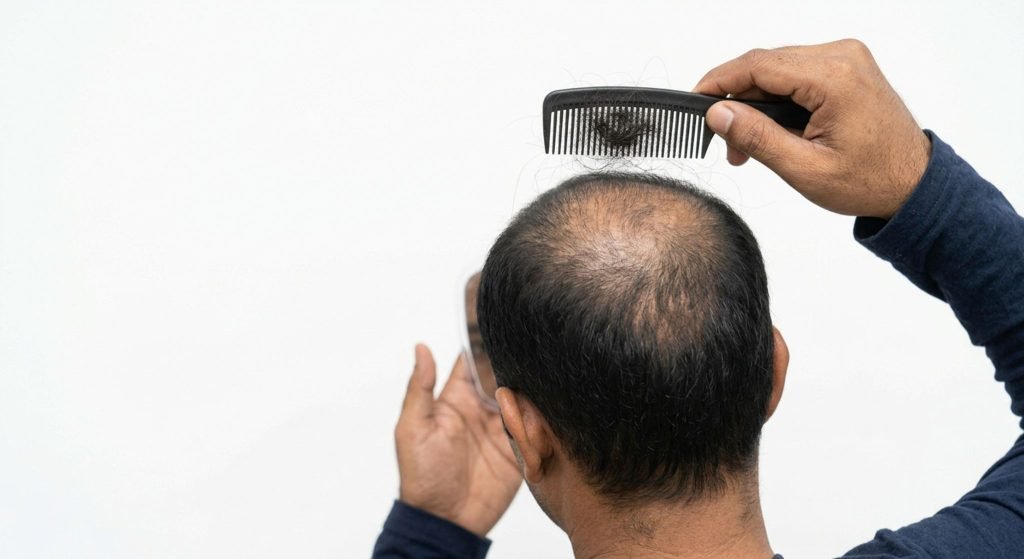
You put in the time and money, but now you worry the hair transplant has failed? A few weeks after a hair transplant, the transplanted hair usually starts to fall out. This often worries patients and makes them wonder whether the transplant failed.
In fact, hair growth after a hair transplant is not instant. Transplanted hair goes through several phases, including temporary shedding, before new hair starts to grow and reaches its full growth.
Why Does Hair Fall Out After a Hair Transplant?
After a hair transplant, some of the transplanted hair can go through shedding (temporary hair loss). In this phase, it is the hair shaft that falls out, while the transplanted hair follicle stays in the scalp.
This is related to the natural hair growth cycle. Hair has an anagen phase (growth phase), a catagen phase (transition phase) and a telogen phase (resting phase). After transplantation, a follicle can enter the resting phase, so the hair shaft visible on the skin surface falls out.
Once that phase is over, the follicle goes back into the growth phase and starts producing new hair. That is why shedding after a hair transplant is not the same as losing grafts.
Hair Growth Timeline After a Hair Transplant
Hair growth after a hair transplant takes time. Everyone progresses differently, but in general the journey after transplantation can be described like this:
Days 1-14: Recovery Phase
The transplanted area is still healing. The grafts start to settle in the area where they were placed and the redness gradually improves.
Weeks 2-8: Shedding Phase
The transplanted hair shafts may start to fall out. This is the phase that often worries patients, but losing the hair shaft does not mean the transplanted follicle is lost too.
Months 2-3: Resting Phase
The transplanted area looks thinner because the new hair is not yet visible on the skin surface. The follicles are on their way to the next growth cycle.
Months 3-6: New Hair Starts to Grow
New hair begins to appear from the transplanted follicles. At first, it can look thinner and finer.
Months 6-9: Growth Becomes More Visible
The hair gets longer and changes in density start to show.
Months 9-12+: Heading Toward Full Growth
The hair keeps growing. Results become more visible, although in some patients or in certain areas the process can take longer than 12 months.
Why Does Hair Growth Differ From Person to Person?
The speed of hair growth after a hair transplant is different for everyone. It depends on the transplanted area, hair characteristics, scalp condition, graft quality, the healing process and the condition of the surrounding natural hair.
Aside from these factors, aftercare also matters during the hair growth process. Because results take time, patients need to follow the care and check-ups their doctor recommends until the hair growth becomes more visible.
What Should You Do While Waiting for Growth?
While waiting for the hair to grow, keep following the care your doctor recommends. For patients with androgenetic alopecia, the doctor may consider minoxidil or finasteride, as well as supporting therapy such as PRP (Platelet-Rich Plasma), depending on the patient’s condition and needs.
So, hair transplant results do take time. Each growth phase has to run its course until new hair grows in and gets thicker. During that process, go to your check-ups on schedule and follow your doctor’s advice to support the best possible hair transplant result.
Discussion
Comments & Questions
Share your comments or questions about this article.