
Calf Botox: Can It Make Your Calves Smaller and Slimmer?
Calves look big even though your weight is ideal? The cause is not necessarily fat. In some people, calves that look large and prominent come from well-developed calf muscle, especially the gastrocnemius.
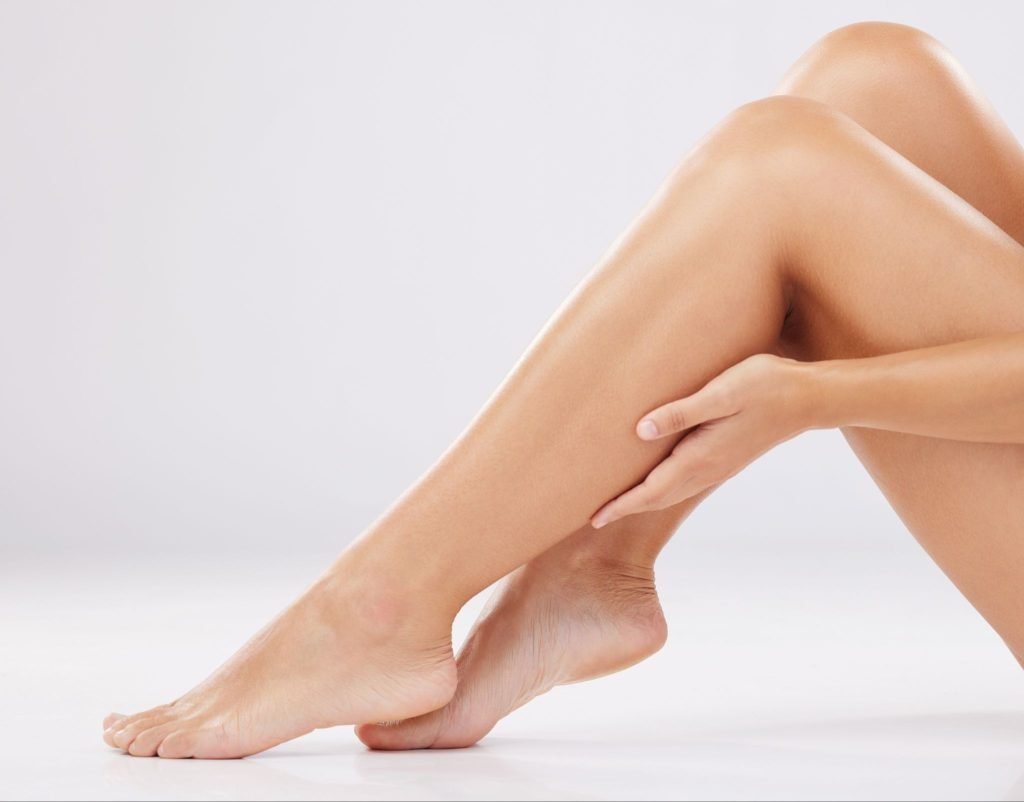
Calves look big even though your weight is ideal? The cause is not necessarily fat. In some people, calves that look large and prominent come from well-developed calf muscle, especially the gastrocnemius.
If calf size is mostly caused by muscle, calf Botox can be one option to help shape the calf contour so it looks slimmer.
So how can Botox make calves look smaller? How long do the results last, and is this treatment safe?
What Is Calf Botox?
Calf Botox is a procedure that injects botulinum toxin type A into specific muscles in the calf area, mainly the gastrocnemius.
The gastrocnemius is a large muscle at the back of the calf that helps determine the shape and contour of the leg. In some people, this muscle is quite thick or prominent, so the calves look bigger.
Botulinum toxin works by temporarily reducing muscle contraction. Over time, the reduced muscle activity can lead to a decrease in muscle volume, so the calf contour looks smoother and slimmer.
Clinical studies have shown a decrease in calf circumference after botulinum toxin A injection in patients with gastrocnemius hypertrophy.
Can Botox Make Calves Smaller?
It can, in certain conditions, especially if the large calf size comes from muscle. A person’s calf size can be affected by several things, such as:
- The thickness of the gastrocnemius and soleus muscles
- Fat tissue in the calf area,
- The anatomical structure of the leg
- And a combination of muscle and fat.
Because it works on muscle, Botox is better suited for calf contouring on muscular calves.
Botox is not a treatment to destroy fat. That is why finding out what makes the calves look big is an important step before having treatment.
How Does Calf Botox Work?
Botulinum toxin works at the connection between nerve and muscle, or the neuromuscular junction. It blocks the release of acetylcholine, so the contraction of the treated muscle is temporarily reduced.
When the activity of the gastrocnemius goes down, the thickness and volume of the muscle can change gradually.
In the end, the prominence of the muscle is reduced, so the calf line can look slimmer and smoother.
The goal of treatment is not to make the calf muscle stop working completely. The dose and injection points need to be planned with the anatomy and function of the leg muscles in mind.
Who Is Calf Botox Suitable For?
Calf Botox can mainly be considered for people who have prominence or hypertrophy of the gastrocnemius muscle and want a slimmer-looking calf contour.
One simple way to see how much the muscle contributes is to stand on tiptoe or tense the calves. If the back of the calf becomes much more prominent when the muscle contracts, the muscle component may be quite dominant.
However, that check does not replace a doctor’s evaluation.
The doctor still needs to assess muscle thickness, the distribution of fat tissue, the shape of the gastrocnemius, the symmetry of both legs, and other anatomical conditions before deciding on treatment.
How Long Until Calf Botox Results Show?
The results of calf Botox do not show right after the injection.
Botulinum toxin first works to reduce muscle activity. After that, changes in muscle volume and contour happen gradually.
In research on muscular calf contouring, changes in calf circumference could be measured starting a few weeks after treatment and could last for several months.
Another study on aesthetic contouring of the gastrocnemius also reported clinical improvement that was still visible up to about 6 months.
The time it takes for results to show can differ from person to person.
How Long Do Calf Botox Results Last?
Botox gives a temporary effect.
Several studies on using botulinum toxin for calf contouring show changes that can last about 6 months or more in some study subjects.
The duration of an individual’s results can be influenced by:
- Muscle thickness,
- The dose given,
- The type of botulinum toxin,
- Each patient’s anatomical characteristics.
That is why results are not always the same for every patient.
Can Calf Botox Remove Fat?
No.
Botox works on muscle activity, not by destroying fat cells. If the calves look big mainly because of fat tissue, Botox may not change the size as much as you hope.
On the other hand, if prominence of the gastrocnemius is the main cause, Botox can be considered as one option to improve the calf contour.
This is why a consultation before treatment matters.
Is Calf Botox Injected in the Same Place for Everyone?
Not in the same place. The shape of the gastrocnemius can differ from person to person. Some patients have prominence that is more dominant on the medial side, the lateral side, or both.
Research on gastrocnemius hypertrophy has even developed a classification based on shape characteristics and the degree of hypertrophy to help plan more individualized botulinum toxin treatment.
That is why the injection points should not be decided only by a standard pattern without looking at the patient’s anatomy.
Does the Soleus Muscle Also Need Botox?
Not necessarily.
Besides the gastrocnemius, the calf has the soleus muscle, which sits deeper.
One study compared treatment of the gastrocnemius alone with treatment of the gastrocnemius and soleus together. Both showed better contour and a drop in calf circumference, but adding injections to the soleus did not show a clear extra clinical benefit compared with treating the gastrocnemius alone.
This means more points or more muscles injected does not automatically give a better outcome. The treatment target needs to be set based on the individual’s condition.
How Many Units of Botox Are Needed for the Calves?
There is no single right number of Botox units for everyone.
The dose needs to take into account the size and thickness of the gastrocnemius, the hypertrophy pattern, anatomy, treatment goal, and the botulinum toxin product used.
A 2024 randomized controlled trial compared two doses of botulinum toxin A for gastrocnemius hypertrophy and found that both reduced calf circumference, with no significant difference in the reduction between the dose groups studied.
This also shows that a higher dose does not always mean a better aesthetic result.
In addition, units from different botulinum toxin products cannot automatically be treated as equivalent. The dose should be decided by a doctor after an examination.
Is Calf Botox Safe?
Botulinum toxin has been used for many medical and aesthetic needs. But like other medical procedures, calf Botox still carries a chance of side effects.
Some effects that can happen include pain or discomfort at the injection site, bruising, temporary changes in muscle strength, and results that are less symmetrical.
The calf muscles play an important role in walking, standing, running, and many other leg activities. That is why understanding anatomy and deciding the dose and injection points are an important part of treatment.
The literature on botulinum toxin for leg contouring also notes that more research is still needed to determine the minimum effective dose and to better understand its long-term effects.
Calf Botox at GLOSKIN
If you feel your calves look big or too muscular, the first step is to find out what makes the calves look big.
A GLOSKIN doctor will do an evaluation to see whether the shape of the calves is influenced more by muscle, fat tissue, or a combination of both.
If prominence of the gastrocnemius muscle is the main component and no contraindications are found, the doctor can consider Botox as one treatment option to help shape the calf contour.
The treatment plan, injection areas, and dose are then adjusted to each patient’s anatomy and needs.
Consult a GLOSKIN doctor about your calves to find out whether calf Botox is a suitable treatment for you.
Journal References
1. Han WY, Lee YS, Han HH. The Efficacy of Botulinum Toxin A Injection for Gastrocnemius Hypertrophy: A Prospective, Randomized, Double-blinded Controlled Trial. Plastic and Reconstructive Surgery Global Open. 2024;12(5):e5813.
2. Wanitphakdeedecha R, et al. A Pilot Study Comparing the Efficacy of Two Formulations of Botulinum Toxin Type A for Muscular Calves Contouring. Journal of Cosmetic Dermatology. 2018.
3. Lee HJ, et al. Botulinum Toxin A for Aesthetic Contouring of Enlarged Medial Gastrocnemius Muscle. Dermatologic Surgery. 2004.
4. Liu D, Xu X, Wu M, et al. Classification of Gastrocnemius Muscle Hypertrophy for Personalized Botulinum Toxin Type A Treatment. Journal of Cosmetic Dermatology. 2024;2ng Y, Jin L, et al. Botulinum Toxin Treatment for Calf Contouring Based on the Study of Combined Injection of Gastrocnemius and Soleus. Aesthetic Surgery Journal. 2024;44( Cheng J, Chung HJ, Friedland M, Hsu SH. Botulinum Toxin Injections for Leg Contouring in East Asians. Dermatologic Surgery. 2020;46(Suppl 1)
Discussion
Comments & Questions
Share your comments or questions about this article.